
 русский
  Français
 Việt Nam
 Español
 日本語
日本語 Português
 عربي
عربي  Deutsch
 Türkçe
 한국어
한국어 Italiano
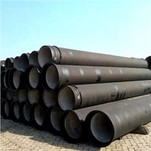
Ductile iron pipes are crucial in many fields due to their excellent strength, corrosion resistance, and good sealing performance. Mastering scientific and reasonable installation and maintenance methods, ensuring their efficient operation and long-term use, is significant for ensuring engineering safety and efficiency.
Installation points:
Construction preparation: Carefully examine the dimensions and appearance of ductile iron pipes and fittings to ensure there are no flaws. Check the quality of the rubber sealing rings by looking for a consistent texture and the correct size. Prepare the building site by ensuring it is level and free of obstacles. Clear the area and organize installation equipment such as cranes and manual hoists.
Pipeline laying: Dig the pipe trench according to the design specifications and the site's real conditions, making sure that the depth and width adhere to the standards, the trench bottom stays level, and a sand cushion layer is laid if needed. To prevent collisions, utilize lifting equipment to smoothly lower the pipeline after transporting it to the location using the proper transportation tools.
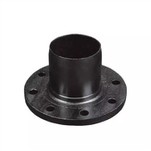
Connection operation: When using a socket-and-plug connection, clean the socket and plug, place a rubber seal ring, apply lubricant, align it, and slowly insert it with a tool to ensure that the axis lines are aligned. A flange connection is suitable for large diameters or special parts. After installing the flange and sealing gasket, the bolts are tightened in a symmetrical cross manner.
Pipeline adjustment and fixation: After the connection is completed, check and adjust the axis and elevation of the pipeline to ensure accurate positioning. To stop pipeline displacement, construct concrete supports at bends, tees, and other places following design specifications.
Pressure test: After the pipeline system is installed and the support pier reaches the design strength, fill the pipeline with water and remove air, slowly increase the pressure to the test pressure, check for no leakage or deformation during the stabilization period, and then reduce it to the working pressure for further stabilization inspection. Only after passing the inspection can it be put into use.
Maintenance points:
Regular inspection: Pipelines should have their look regularly inspected for wear, corrosion, cracks, and other issues. Pay close attention to the state of the anti-corrosion coating. Verify whether the rubber sealing ring is aged or distorted by looking at the interface's sealing state. Check the expansion joints and valves, among other auxiliary facilities, to make sure they are operating normally at the same time.
Water quality management: Water quality should be carefully monitored when using ductile iron pipes for water transport to prevent the presence of corrosive materials. To ensure adequate water delivery capacity and quality, it is important to clean the pipeline regularly. Cleaning methods such as chemical treatments or high-pressure water cleaning can be utilized.
Anti-corrosion treatment: If the coating is damaged, it should be repaired promptly according to the original process. For buried pipelines, cathodic protection measures can be taken, such as the sacrificial anode method, to regularly check the consumption of anodes and replace them on time.
Prevent external damage: Set up signs and warning signs along the pipeline to prevent dangerous operations nearby. Protective measures should be taken for vulnerable areas such as crossing roads and rivers, as installing steel sleeves or ensuring sufficient burial depth and stabilizing the pipes.
The installation and maintenance of ductile iron pipes are closely related and essential. From precise operations during installation to thorough inspections during maintenance, strictly adhering to the specifications is crucial for ensuring the stable and efficient performance of ductile iron pipes.